The Tripoli Shrine Center is one of Milwaukee’s most distinctive buildings. Inspired by the Taj Mahal and completed in 1928, it stands as both a historic landmark and the enduring home of Tripoli Shriners.
A building that carries memory, identity, and civic presence.
The shrine stands on Milwaukee’s near west side and was conceived during a period when fraternal organizations were building spaces that reflected ambition, fellowship, and public presence. Its exterior silhouette, interior detailing, and ceremonial atmosphere still make it central to the public identity of Tripoli Shriners.
The building was inspired by the Taj Mahal, though not intended as a literal replica. Its dome, minarets, ornamental detailing, and the stone camels at the entrance give it a visual identity unlike nearly any other building in the city, or even other shrine centers around the country.

At a glance
- Ground broken in 1925
- Completed and occupied in 1928
- Inspired by the Taj Mahal
- Built on a 3.5-acre site on Milwaukee’s near west side
- Home and headquarters of Tripoli Shriners
Built at a moment when fraternal life had major civic and social presence.
In the early twentieth century, fraternal organizations were not only ceremonial communities but also major centers of social and business connection. Tripoli’s building reflects that era of confidence, scale, and public identity.
When Tripoli Shriners chose to build a permanent home, they acquired the property, cleared earlier structures from the site, and created a building intended to feel memorable from the street all the way through the interior ceremonial spaces.
What made it stand out
- An unusually ornate silhouette for Milwaukee
- A dome and minarets that made the building instantly recognizable
- Stone camels flanking the entrance
- Interior decorative work with strong ceremonial atmosphere
Exterior form, interior atmosphere, and architectural detail
The building’s presence comes through in its ornament, scale, craftsmanship, and ceremonial spaces. Together, those qualities create a setting that feels historic, memorable, and inseparable from the fraternity it serves.
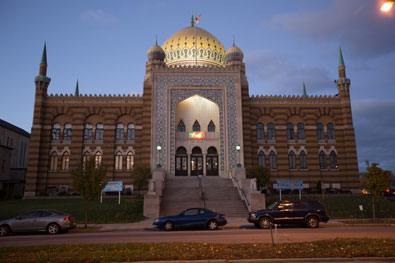
Exterior portrait
A landmark façade whose dome, minarets, and entrance camels give Tripoli one of the most recognizable silhouettes in Milwaukee.
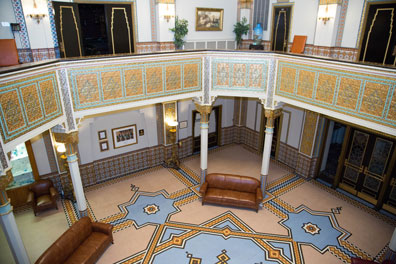
Interior atmosphere
Spaces shaped by ceremony, hospitality, and a sense of dramatic architectural presence.
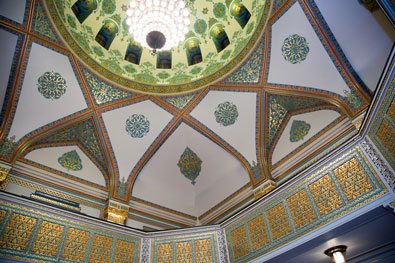
Detail and ornament
Rich decorative work that reinforces the building’s singular identity and historical character.